When planning a solar installation, most of the attention goes to panel efficiency, inverter technology, and financing options. But there’s one decision that quietly shapes the long-term success of your entire system: the material of your mounting brackets and rails.
Aluminum and steel are the two dominant materials in solar racking, and each has a loyal following among installers and engineers. The choice isn’t simply about which is “better” — it’s about which delivers the best total cost of ownership for your specific project, climate, and budget.
In this guide, we break down the real differences between aluminum and steel solar brackets, compare their costs beyond the price tag, and help you decide which material is the smarter investment.
Your racking system is the structural backbone of your solar array. It has to hold hundreds of pounds of panels in place through wind gusts, snow accumulation, UV exposure, and temperature swings for 25+ years. The material determines:
A wrong material choice can lead to premature corrosion, costly roof reinforcement, or expensive mid-life replacements. Getting it right means looking beyond per-foot pricing and considering the full lifecycle cost.
Aluminum Solar Brackets: Lightweight and Corrosion-Resistant
Aluminum — specifically anodized 6005-T5 or 6063-T6 aluminum — is the most common material for residential and light-commercial solar racking. Its popularity stems from a unique combination of properties.
Exceptional corrosion resistance. Aluminum naturally forms a protective oxide layer when exposed to air. Anodizing further thickens this layer, making aluminum brackets highly resistant to rust — even in coastal areas with salt spray or regions with high humidity. This is the single biggest reason aluminum dominates residential rooftop installations.
Lightweight. Aluminum weighs roughly one-third as much as steel for the same volume. A typical aluminum rail might weigh 1.5–2 lbs per foot, compared to 4–6 lbs for a comparable steel rail. This means:
Easy to fabricate and adjust. Aluminum is softer and more workable than steel. Installers can cut rails on-site with standard tools, drill holes without special bits, and make adjustments quickly. This reduces labor time — a significant portion of any solar installation cost.
Aesthetic appeal. Anodized aluminum has a clean, modern silver finish that complements most residential roofs. Black anodized options are also available for a sleek, low-profile look.
Lower strength-to-size ratio. While aluminum has a good strength-to-weight ratio, it’s not as stiff as steel. For the same cross-sectional profile, aluminum will deflect more under load. This often means wider or thicker rail profiles are needed, which can offset some of the weight advantage.
Higher material cost per pound. Aluminum typically costs 2–3 times more per pound than steel on the commodities market. However, because less material is often needed (due to its light weight) and installation is faster, the total system cost isn’t always higher.
Thermal expansion. Aluminum expands and contracts more with temperature changes than steel. While properly designed racking accounts for this, it’s a factor in very long rail runs or extreme temperature environments.
Steel — usually galvanized steel (hot-dip or pre-galvanized) or occasionally stainless steel — is the traditional workhorse of structural mounting. It’s especially common in ground-mount, commercial, and utility-scale solar installations.
Superior strength and stiffness. Steel is significantly stronger and stiffer than aluminum. A steel rail of the same profile can span greater distances between supports, handle heavier snow loads, and resist wind uplift with less deflection. This makes steel the go-to choice for:
Lower raw material cost. Steel is one of the most affordable structural materials available. On a per-pound basis, galvanized steel costs roughly half to one-third of aluminum. For large-scale projects where material volume is high, this can translate to substantial savings.
Proven durability. Galvanized steel has been used in outdoor structural applications for over a century. A proper hot-dip galvanized coating can provide 20–50 years of corrosion protection in moderate environments, and the underlying steel is incredibly robust.
High temperature tolerance. Steel maintains its strength at higher temperatures better than aluminum, which can lose some structural capacity in extreme heat.
Heavy. Steel is dense. A full steel racking system can weigh 2–3 times more than an equivalent aluminum system. This means:
Corrosion risk. Despite galvanizing, steel is still vulnerable to corrosion, especially in:
Once corrosion starts, it can spread quickly and compromise structural integrity. Stainless steel solves this but costs significantly more.
Harder to work with on-site. Cutting and drilling steel requires more powerful tools and takes longer. On-site modifications are slower, which increases labor costs. Pre-fabricated steel systems mitigate this but reduce flexibility.
Head-to-Head Comparisonb
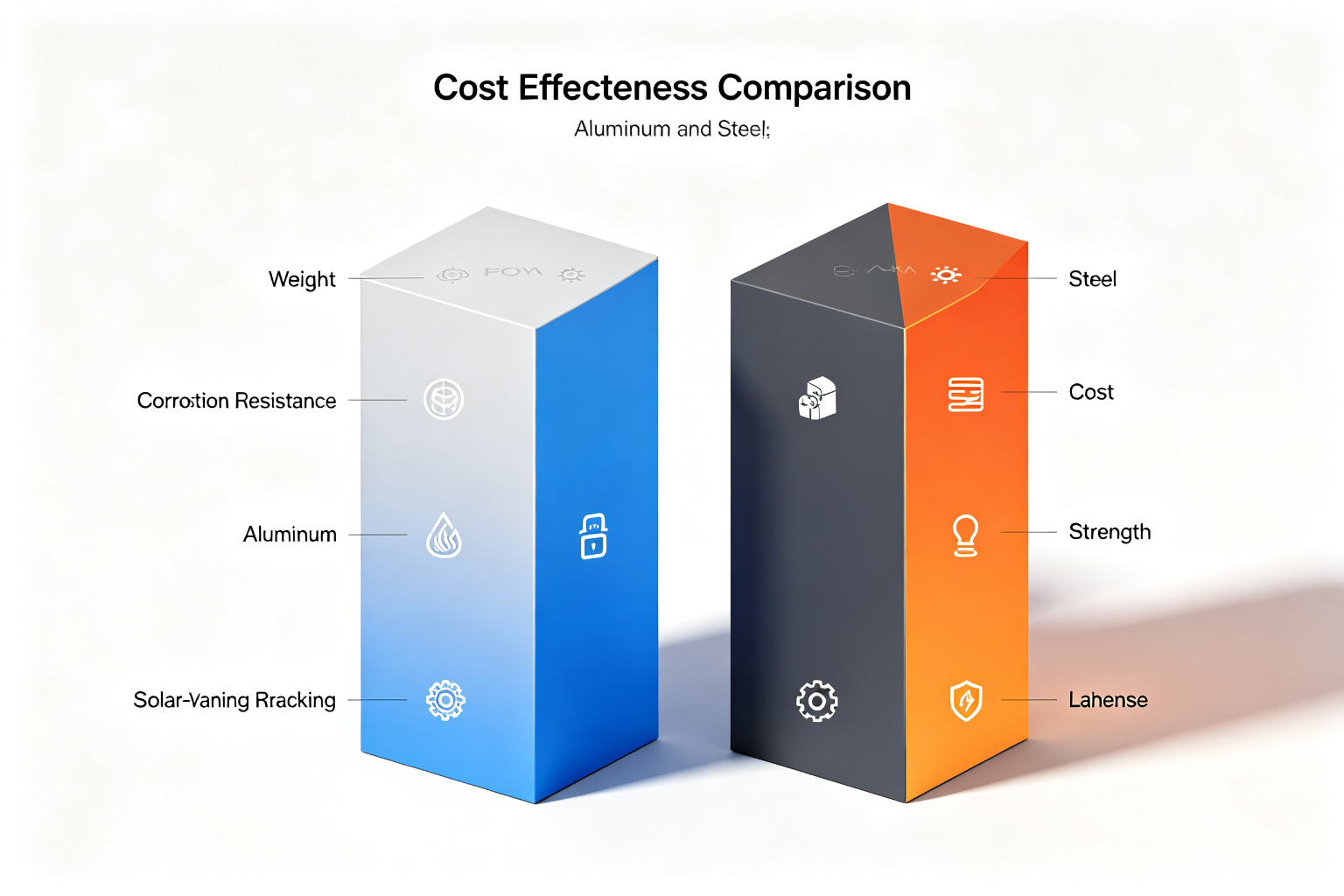
| Factor | Aluminum (Anodized) | Steel (Galvanized) |
|---|---|---|
| Material cost (per lb) | High ($1.50–$3.00/lb) | Low ($0.50–$1.20/lb) |
| Weight per rail foot | 1.5–2.5 lbs | 4–6 lbs |
| Corrosion resistance | Excellent (natural oxide + anodizing) | Good (galvanized coating, but can scratch/rust) |
| Strength & stiffness | Good (may need wider profiles) | Excellent (spans greater distances) |
| Roof load impact | Low | High (may need reinforcement) |
| Installation speed | Fast (lightweight, easy to cut) | Slower (heavier, harder to modify) |
| Labor cost | Lower | Higher |
| Shipping cost | Lower | Higher |
| Lifespan (moderate climate) | 25–30+ years | 20–30 years |
| Lifespan (coastal/corrosive) | 25–30+ years | 10–20 years (may need replacement) |
| Best for | Residential rooftops, coastal areas, fast installs | Ground mounts, commercial, heavy snow/wind, large-scale |
| Cost Category | Aluminum | Steel |
|---|---|---|
| Material (rails + brackets) | Higher | Lower |
| Shipping | Lower (lighter) | Higher (heavier) |
| Labor / installation | Lower (faster, easier) | Higher (slower, more workers) |
| Roof reinforcement (if needed) | Rarely needed | Sometimes needed |
| Total upfront | Often comparable or slightly higher | Often comparable or slightly lower |
For a typical residential rooftop system (6–10 kW), the total installed cost difference between aluminum and steel racking is often minimal — sometimes just 2–5% of total system cost. The higher material cost of aluminum is largely offset by faster installation and lower shipping.
For large ground-mount or commercial systems (100 kW+), steel’s lower material cost becomes more significant because material volume is high and labor per watt is lower. Steel can save 5–15% on racking costs at scale.
This is where the picture shifts dramatically depending on your environment:
In moderate, dry climates: Both materials can last 25+ years with minimal maintenance. Long-term costs are roughly equal.
In coastal or high-humidity climates: Aluminum’s superior corrosion resistance means it’s likely to last the full 25–30 year warranty period without issue. Steel may require inspection, touch-up painting, or even partial replacement after 10–15 years — costs that can easily erase any upfront savings.
In heavy snow or high wind regions: Steel’s superior strength may allow wider post spacing (for ground mounts) or fewer roof penetrations, reducing both material and labor. Aluminum may require additional supports or thicker profiles, narrowing the cost gap.
Steel’s heavier weight isn’t just a structural concern — it’s a financial one. If a steel system causes roof sagging, cracked rafters, or accelerated wear, the repair costs can run into thousands of dollars. Aluminum’s lighter footprint is gentler on your roof, which is especially important for older homes or roofs with marginal load capacity.
Which Material Should You Choose?
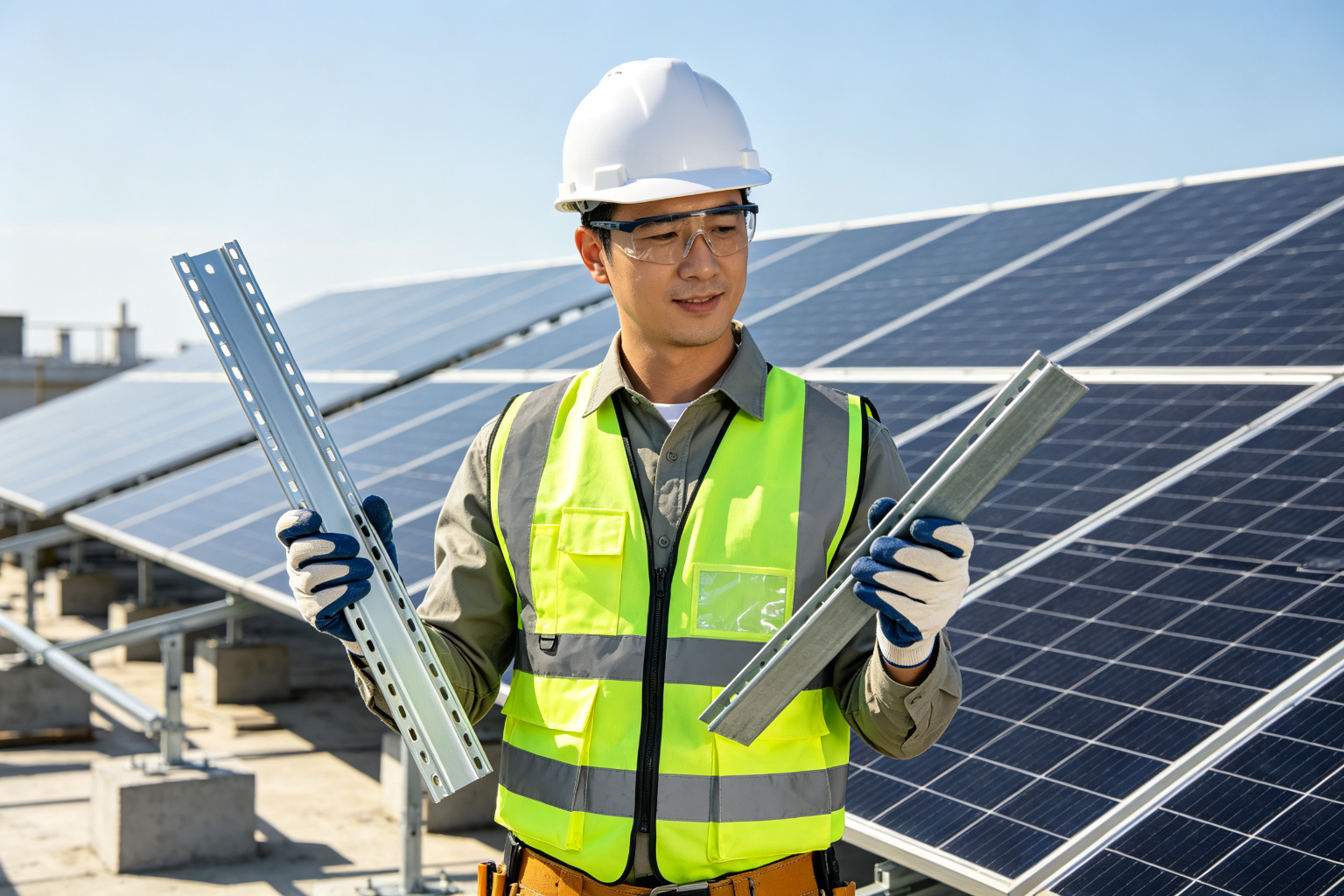
There’s no universal winner — the best choice depends on your project. Here’s our recommendation framework:
Many professional installers use both materials in a single system:
This hybrid approach leverages the strengths of each material where they matter most, often delivering the best overall cost-effectiveness.
Myth: “Steel is always cheaper.”
Reality: On a total installed cost basis, aluminum is often comparable for residential systems due to lower labor and shipping. Steel’s cost advantage only really kicks in at large scale.
Myth: “Aluminum is too weak for solar.”
Reality: Properly engineered aluminum racking meets all building codes for wind and snow loads. It may use wider profiles, but it’s fully capable — that’s why it’s the #1 choice for residential solar worldwide.
Myth: “Galvanized steel never rusts.”
Reality: Galvanizing provides excellent protection, but scratches, cut edges, and coastal salt air can accelerate corrosion. Regular inspection and touch-up are needed in harsh environments.
Myth: “All aluminum racking is the same.”
Reality: Alloy grade (6005-T5 vs 6063-T6), anodizing thickness, and extrusion quality vary significantly between manufacturers. Cheap aluminum racking may use thinner profiles or skip anodizing, reducing lifespan.
So, which is more cost-effective? It depends — but for most residential and light-commercial rooftop installations, aluminum wins on total cost of ownership. Its corrosion resistance, lightweight design, and faster installation offset the higher per-pound material cost, especially when you factor in 25+ years of maintenance-free performance.
Steel remains the champion for large ground-mount systems, heavy-load environments, and budget-constrained projects in moderate climates, where raw material cost and maximum strength are the deciding factors.
The smartest approach? Don’t decide based on material alone. Evaluate the complete racking system — brand reputation, warranty coverage (look for 20+ year warranties), engineering certifications, and your installer’s experience with the material. A quality system from a reputable manufacturer, whether aluminum or steel, will outperform a cheap system every time.
Before signing your solar contract, ask your installer:
The right material choice, paired with quality components and professional installation, ensures your solar array stands strong — and keeps generating savings — for decades to come.