Flat roofs offer a clean surface for solar, but the mounting decision is rarely as simple as choosing the lowest initial cost. The two most common approaches—ballasted and attached mounting—solve the same installation problem in very different ways. The right choice depends on the roof, the building structure, local wind conditions, and the project’s long-term plan.
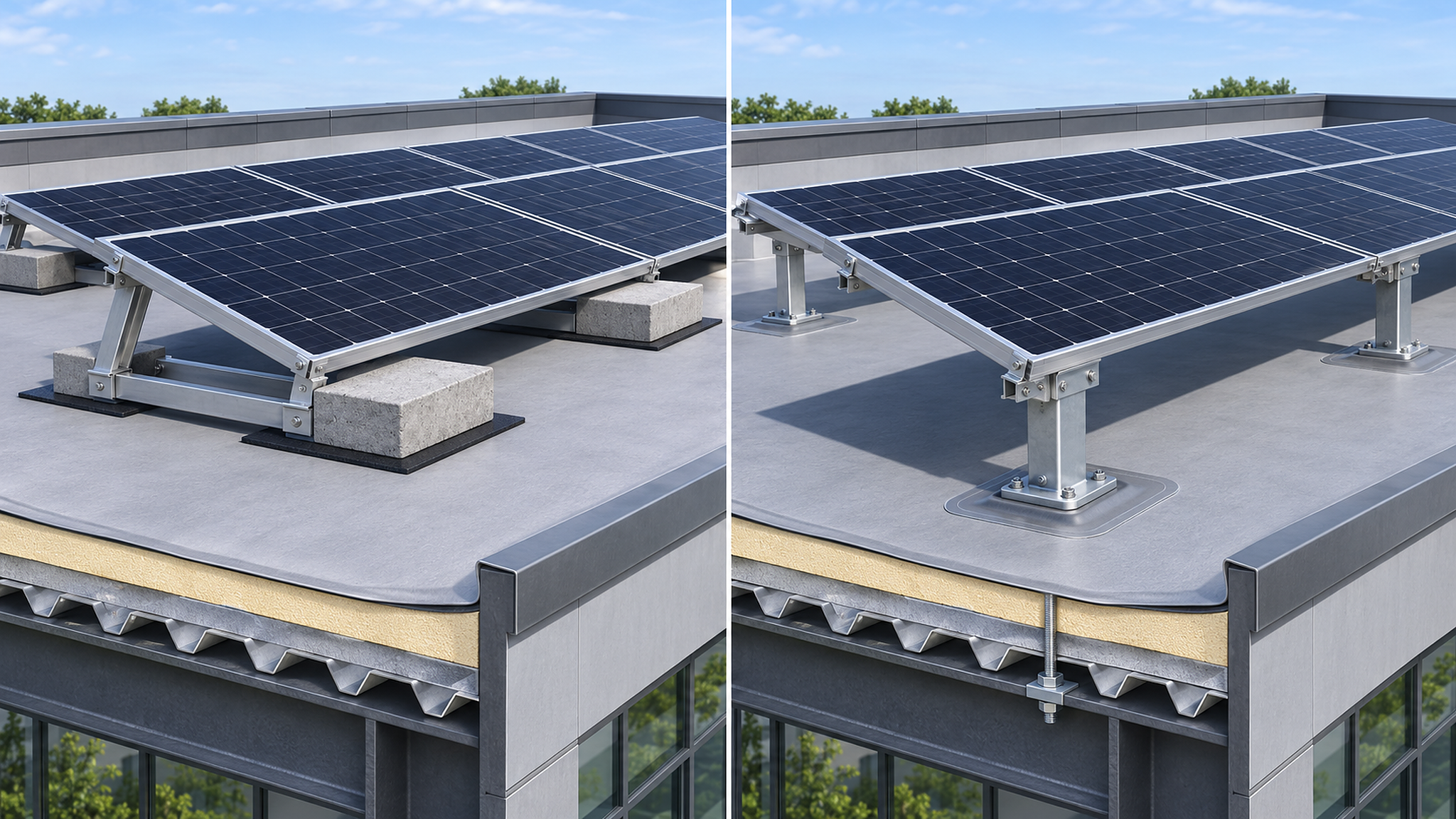
What is a ballasted solar mounting system?
A ballasted system uses the weight of concrete blocks or other approved ballast to keep the array in place. It normally avoids drilling through the roof membrane, which can simplify installation and reduce penetration-related waterproofing risks.
This approach is often attractive for commercial roofs where preserving the existing membrane is a priority. It can also make future removal or layout changes more straightforward. However, the additional weight must be checked against the roof’s allowable dead load. Ballast placement, roof zones, parapets, drainage paths, and wind uplift all need to be considered in the design.
Ballasted arrays may require more roof area because the layout must maintain clearances and distribute loads properly. On roofs with limited structural capacity, the extra weight can become the deciding constraint.
What is an attached solar mounting system?
An attached system connects the racking to the building structure through engineered fasteners, posts, or other approved attachment points. The load is transferred into the roof deck, purlins, beams, or other structural members, while flashing and sealants protect the penetration points.
Because it relies less on added weight, attached mounting can work well where the roof has limited spare load capacity or where high wind resistance is a major concern. It may also provide more flexibility for steep tilt angles or project-specific array geometry.
The trade-off is a more involved installation. The roof assembly and structural members must be located before drilling, and every penetration must be detailed and inspected carefully. Existing warranties, maintenance procedures, and future reroofing plans should be reviewed before work begins.
Key factors for choosing between them
Roof condition and warranty: A newer roof with a long remaining service life may suit either option. If reroofing is planned soon, attaching equipment may complicate the schedule. If membrane penetrations are restricted, ballasted mounting may be preferable—provided the structure can carry the load.
Structural capacity: Ballasted systems add significant dead load. Attached systems reduce that added weight but introduce point loads and connection forces. A structural engineer should verify the complete load path for either design.
Wind and site exposure: Open sites, coastal areas, and buildings with strong edge effects require careful wind analysis. Ballast quantity and layout may increase, while attached systems need verified connection and flashing details.
Installation and maintenance: Ballasted systems can be faster to install on suitable roofs. Attached systems may require more preparation but can offer a compact, highly secured layout. In both cases, access paths, drainage, and maintenance clearance should remain open.
Lifecycle cost: Compare more than the racking price. Include structural work, engineering, roof repairs, waterproofing details, labor, future removal, and reroofing constraints.
A practical decision rule
Choose ballasted mounting when avoiding roof penetrations is important and the building can safely support the added distributed load. Choose attached mounting when weight must be minimized, wind demands are high, or the roof structure and long-term plan support engineered connections.
For many projects, the best answer comes from comparing both designs at the concept stage. A roof assessment, structural review, wind study, and warranty check can turn the choice from a guess into a defensible engineering decision.